
Beyond the Basics: Roth vs. Traditional, 529 Plans, and Alternative Investments
Once the foundation is set — you're saving automatically into a diversified portfolio — three intermediate questions reliably come next: Roth or traditional? What about the kids' education? And should I own any of those “alternative” investments I keep hearing about? Here's the working framework for all three.
Roth vs. traditional: it's all about when you pay the tax
Both account types shelter growth from taxes. The entire difference is timing:
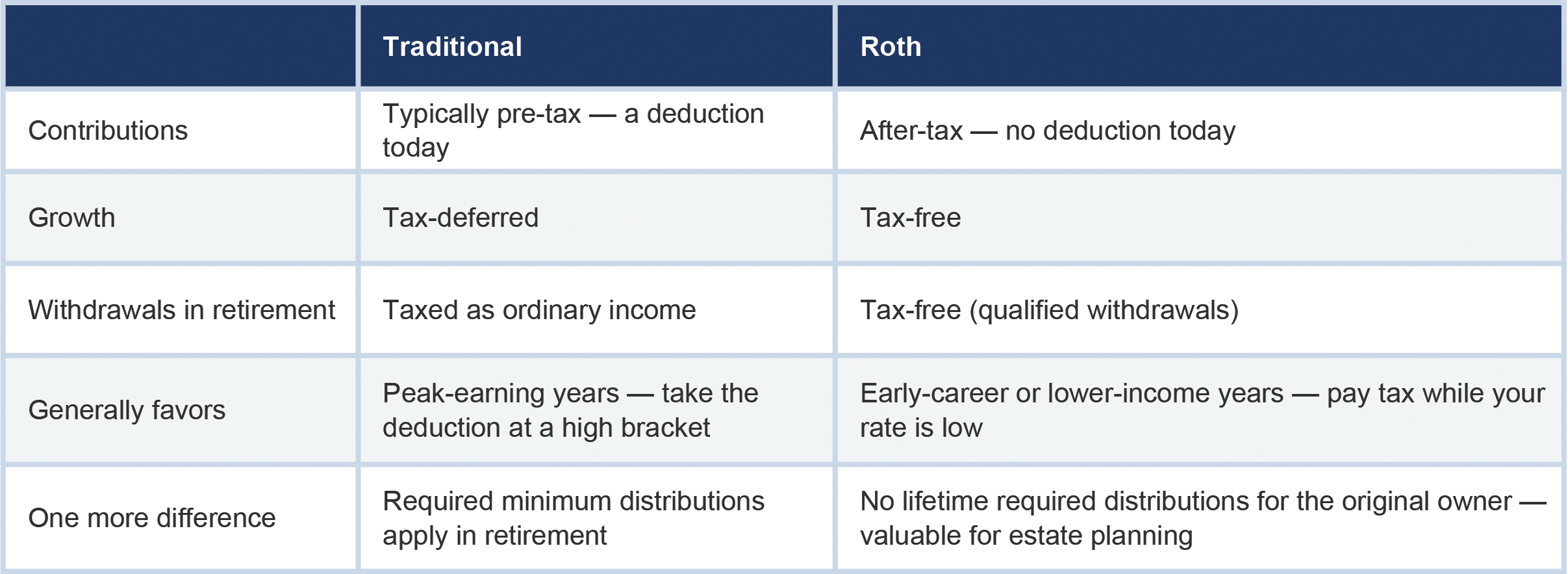
The honest answer for many households is both — “tax diversification.” Nobody knows future tax rates, so holding pre-tax and after-tax buckets gives retired-you the flexibility to draw from whichever is smarter each year. Contribution limits, income thresholds, and conversion rules change regularly — confirm current figures before acting.
529 plans: eighteen years of tax-free compounding
For education goals, 529 plans are the workhorse: contributions grow tax-advantaged and come out tax-free for qualified education expenses. Many states add their own tax benefits, grandparents can contribute as part of a gifting strategy, and rules have generally grown more flexible about unused funds over time. Details vary by state and change often — confirm the current rules — but the core logic is unbeatable: the earlier the account opens, the more of the eventual tuition bill compounding pays instead of you.
Alternative investments: what they are, and what they aren't
“Alternatives” covers everything outside public stocks, bonds, and cash — private equity, private credit, real estate funds, hedge strategies, commodities. Used well, they can genuinely diversify a large portfolio, because their returns don't move in lockstep with public markets. But the honest trade-offs are steep: illiquidity (your money can be locked up for years), fees far above index-fund levels, complexity that resists easy evaluation, opaque pricing, and access often restricted to accredited investors. The uncomfortable truth: alternatives are frequently sold harder than they perform, precisely because those fees reward the seller.
- Foundation first — alternatives are seasoning, never the meal; most households need none at all.
- Never invest in what can't be explained to you in plain English — complexity is a cost, not a credential.
- Size any allocation so a total lock-up (or loss) wouldn't change your plan.
- Ask what the all-in fees are, and who is paid to recommend it. A fiduciary answer plainly.
Sophistication isn't owning complicated things. It's knowing exactly why you own everything you own.

Roth conversion questions? Education funding? Being pitched a private fund? IPM Advisory gives fiduciary answers — grounded in your plan, not in what pays a commission.

