

An investment philosophy is the bedrock that keeps you focused in good times and bad. Markets will always face turbulence — tariffs, recessions, trade wars, real wars, booms and busts — yet over decades the S&P 500 has delivered roughly 10% annualized returns through all of it. The key is staying invested long enough to capture that. These five principles show how.
Have a Plan — and Stick With It
A solid plan covers every part of your financial life: budgeting, cash reserves, investments, retirement, insurance, and taxes. It reduces uncertainty and keeps you on track. Focus on what you can control — like an emergency fund covering 3–6 months of expenses (6–12 in especially uncertain times). Your plan is a roadmap: review it regularly, but don’t abandon it because of short-term market noise.
Balance Short-Term and Long-Term Thinking
Patience has become a lost art. We want everything the moment we think of it — overnight delivery, whole seasons to binge at once — and that impatience creeps into investing, where some obsess over daily or even hourly moves. It’s a mistake. The chart below shows why.
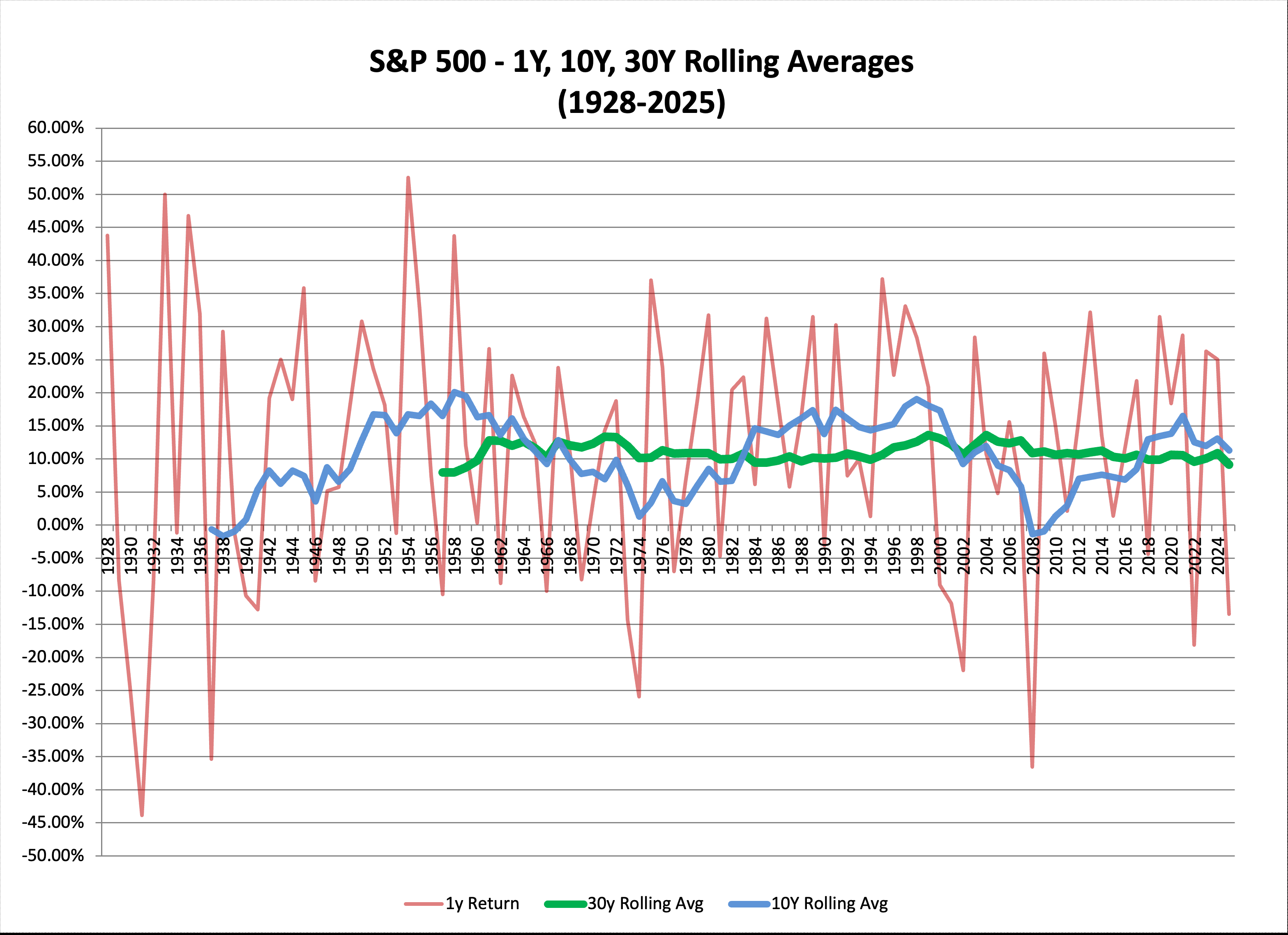
The annual return (the jagged line) is a wild ride — up 50% one year, down 45% the next. But the 10-year average smooths those swings, landing near 10.5% a year since 1928, with the worst 10-year stretch at about −1.6% annually. Over 30 years, the lowest average has been about +8% a year, with an overall average near 11%. Notice how calm the 30-year line is — almost a straight line compared with the annual chaos.
Patience pays off — markets reward those who think in decades, not days.
Stay Adaptable
Finally, stay adaptable — but let changes be driven by your situation, not the market’s mood. A new job (or job loss), a baby, a marriage, a death: those are valid reasons to adjust. A few bad market days are not. That doesn’t mean ignoring uncertainty — you might raise cash, pay down debt, or trim spending — but adjustments shouldn’t be drastic or reverse your whole plan. As the chart shows, the market has had countless bad days over the decades, and has always recovered.

